Furniture Storage Risk Calculator
Enter your storage conditions below to determine if plastic wrap is safe for your specific piece of furniture.
Key Recommendations:
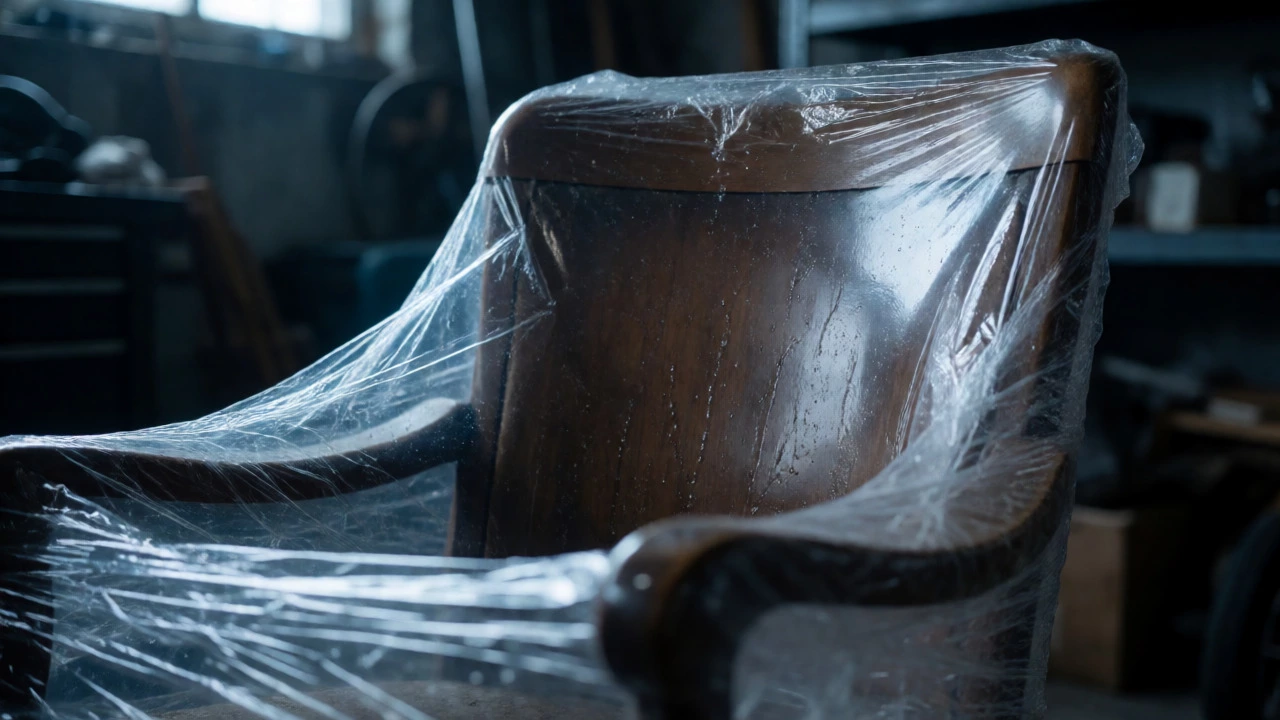
You just bought a new sofa, or maybe you’re finally decluttering the attic. You’ve got a roll of industrial-strength plastic wrap in your hand, and it seems like the obvious solution: shrink-wrap that chair until it’s shiny and safe. But here is the uncomfortable truth: wrapping furniture in plastic can actually destroy what you’re trying to protect.
Why? Because wood breathes. Leather needs air. Fabric traps moisture. If you seal a damp dresser in non-breathable polyethylene and leave it in a garage for six months, you haven’t preserved it-you’ve created a greenhouse for mold. This guide breaks down exactly when plastic works, when it fails, and how to store your pieces so they look brand new when you unpack them.
The Science Behind the Seal
To understand why plastic is risky, you have to look at what happens inside the wrap. Most household plastic wraps are made from polyethylene. They are excellent barriers against water liquid, but they are terrible at managing water vapor. When you wrap a piece of furniture, you trap whatever humidity was present in the room at the moment of wrapping. If the relative humidity is above 60%, that moisture has nowhere to go.
As temperatures fluctuate-say, between a cool night and a hot afternoon-the air inside the wrap expands and contracts. This process, often called "breathing," forces moisture into the porous surfaces of wood and fabric. Over time, this leads to two major problems: hydrolysis (where water breaks down chemical bonds in finishes) and microbial growth. Mold spores love dark, damp, stagnant environments. Your wrapped armchair becomes a perfect incubator.
However, plastic isn't always the villain. For non-porous items like metal frames, glass tops, or sealed melamine cabinets, plastic is fantastic. It keeps dust off and prevents minor scratches during transport. The key is knowing which materials tolerate confinement and which ones suffocate.
Material Matters: What Can and Cannot Be Wrapped
Not all furniture reacts the same way to being cocooned in plastic. Here is a breakdown by material type to help you decide on the right protective layer.
| Material | Plastic Suitability | Risk Factor | Recommended Alternative |
|---|---|---|---|
| Solid Wood | Poor | High risk of mold and finish clouding | Breathable cotton moving blankets or paper |
| Leather | Very Poor | Drying out, cracking, or mildew depending on humidity | Cotton sheets with conditioner applied beforehand |
| Upholstered Fabric | Moderate | Trapped odors and potential staining if wet | Plastic only if bone-dry; otherwise breathable covers |
| Metal/Glass | Excellent | Low risk; mainly scratch protection | Bubble wrap or plastic film |
| Laminated/Melamine | Good | Low risk if edges are sealed | Plastic wrap or bubble wrap |
Solid wood is the most sensitive category. Whether it’s oak, pine, or mahogany, wood is hygroscopic-it absorbs and releases moisture from the air. When you block that exchange with plastic, you disrupt its natural equilibrium. If the wood was slightly damp when wrapped, it stays damp. If the environment gets cold, condensation forms directly on the varnish, leading to white rings or "milky" spots that are nearly impossible to polish out without refinishing.
The Humidity Threshold Rule
If you absolutely must use plastic, you need to manage the environment around it. You cannot rely on the plastic alone. The golden rule for long-term storage is keeping relative humidity (RH) between 35% and 55%. Above 60% RH, mold growth accelerates exponentially. Below 30% RH, wood shrinks and joints loosen.
Most standard storage units, especially those in basements or unheated garages, hover around 70-80% RH in summer and drop significantly in winter. This swing is deadly for wrapped furniture. If you are storing in a climate-controlled unit, plastic is safer because the temperature remains stable. If you are using a self-storage facility, check if they offer climate control. If not, avoid plastic for anything porous.
A practical tip: Before wrapping, test the moisture content of wooden items. You can buy a cheap pinless moisture meter online for under $30. Aim for readings below 12% for indoor furniture. If your dresser reads 18%, let it dry out in a well-ventilated area for a few days before packing it up. Never wrap damp furniture.
How to Wrap Properly (If You Must)
Let’s say you’re moving across town and need quick protection for a bookshelf. Plastic is fine for short trips. But for storage, you need a technique that mitigates the risks. Here is the step-by-step method professionals use when plastic is unavoidable.
- Clean and Dry: Wipe down every surface with a microfiber cloth. Ensure no crumbs, spills, or dampness remain. Let the item sit uncovered for 24 hours to equalize temperature and moisture.
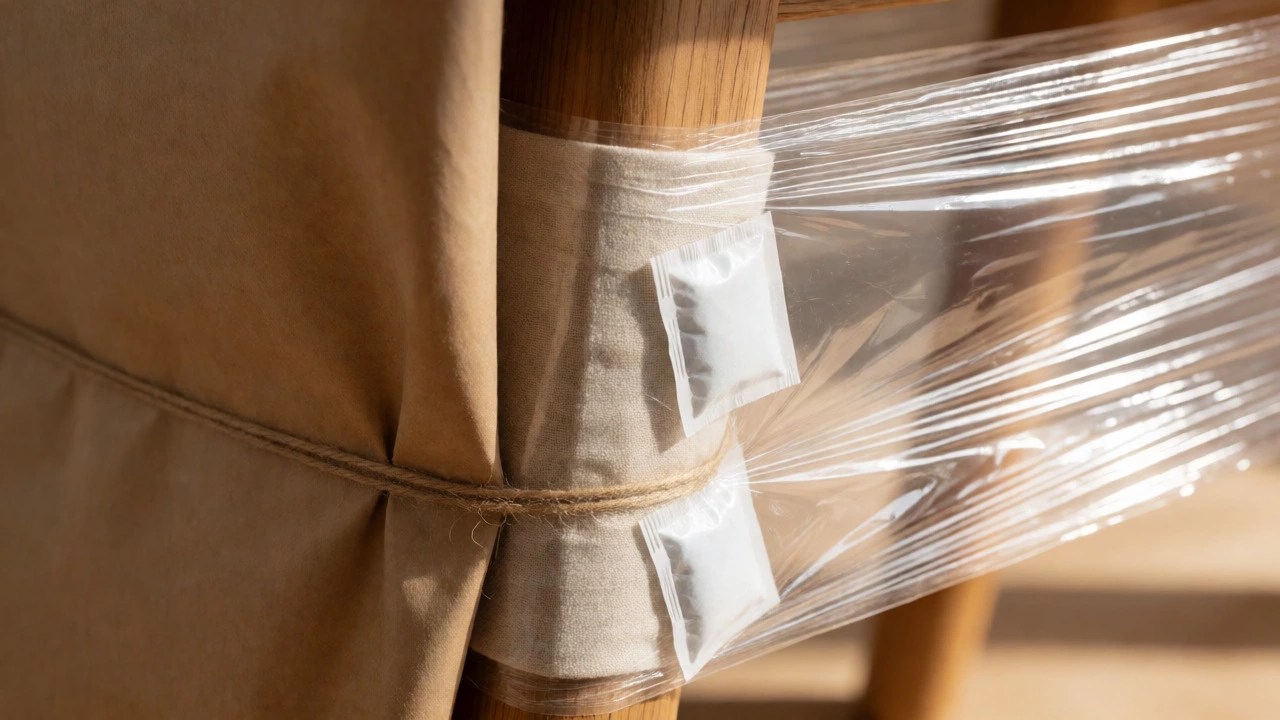
- Apply Breathable Barrier: Do not put plastic directly on wood or leather. First, wrap the item in a clean cotton sheet, muslin bag, or even brown kraft paper. This layer absorbs excess moisture and allows the material to breathe slightly.
- Secure the Barrier: Use tape or twine to hold the paper/cloth in place. Do not use adhesive tape directly on painted or finished surfaces, as it can peel the finish when removed.
- Add Plastic Layer: Now, wrap the plastic over the breathable layer. Leave gaps at the top and bottom if possible, or do not seal it completely tight. You want some airflow.
- Insert Desiccants: Place silica gel packets or activated charcoal bags between the breathable layer and the plastic. These absorb trapped moisture. Replace them every three months if storing long-term.
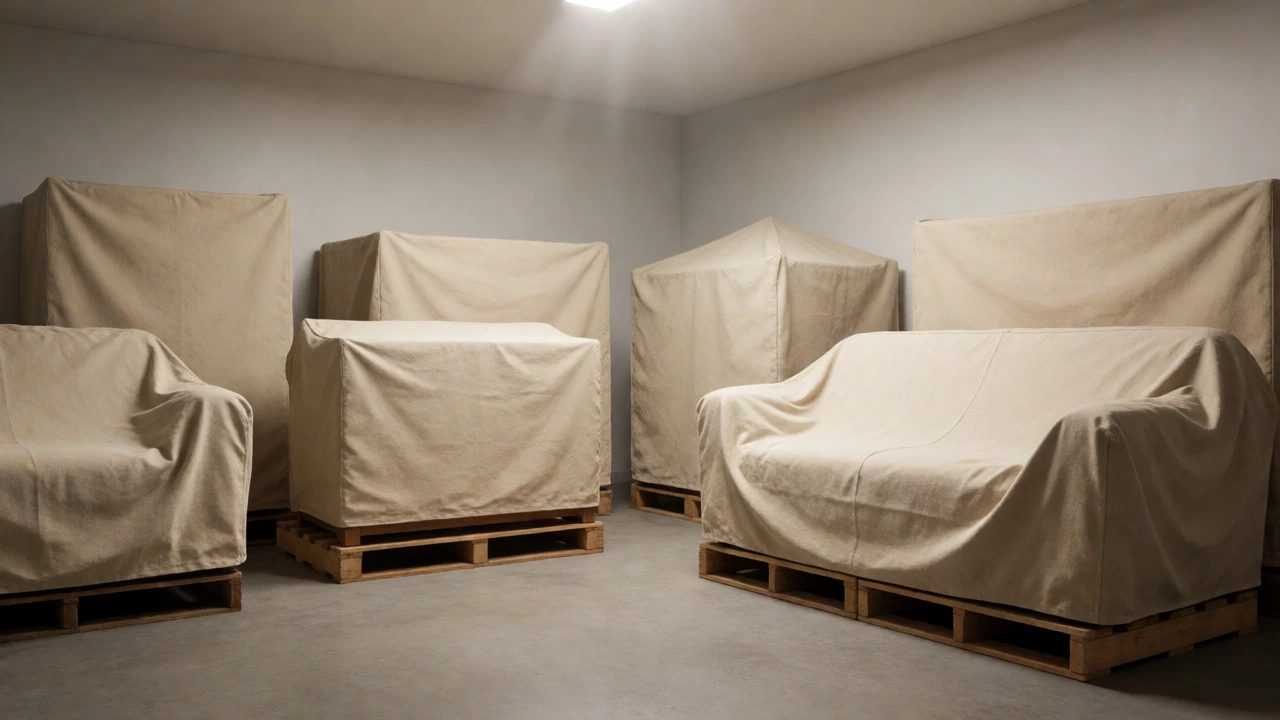
- Elevate: Never place wrapped furniture directly on concrete floors. Concrete wicks moisture upward. Use pallets or cardboard stacks to lift the item at least four inches off the ground.
This multi-layer approach creates a buffer zone. The inner layer handles immediate moisture contact, while the outer plastic shields against dust and pests. It’s not perfect, but it’s far better than naked plastic on bare wood.
Common Mistakes That Ruin Furniture
Even with good intentions, people make errors that lead to regret. One of the biggest issues is ignoring pest attraction. Plastic smells like nothing, but mice and silverfish are attracted to the glue on labels or the residue on furniture legs. If you wrap an item tightly, pests might chew through the plastic to get to the organic material underneath, leaving holes that are hard to spot until you unwrap everything.
Another mistake is stacking too high. Plastic-wrapped items become slippery. If you stack a heavy wardrobe on top of a plastic-wrapped table, the pressure can crush the foam padding or distort the shape. Always keep heavier items on the bottom and ensure the base is stable.
Finally, don’t forget about light exposure. While plastic protects from dust, clear plastic doesn’t block UV rays. If your storage unit has windows or skylights, sunlight can fade fabrics and darken wood finishes over time. If light is a concern, use opaque covers or park your items away from direct sun paths.
When to Choose Alternatives
If you are worried about the risks, skip plastic entirely. There are better options for long-term storage that prioritize ventilation.
- Canvas Covers: Custom-fit canvas covers are ideal for sofas and mattresses. They allow full airflow while blocking dust. Look for ones with zippers so you can inspect the item without removing the whole cover.
- Furniture Pads: Thick quilted pads provide cushioning and breathability. They are reusable and eco-friendly compared to single-use plastics.
- Cardboard Boxes: For smaller items like lamps or decorative objects, sturdy cardboard boxes offer rigid protection and natural breathability. Just make sure the box is dry before sealing it shut.
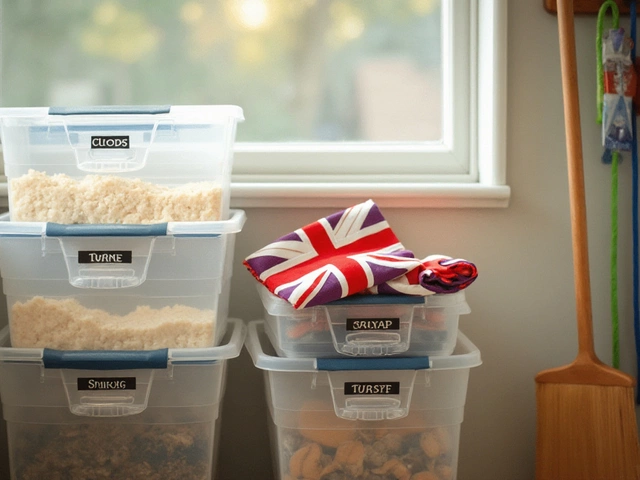
- Ventilated Bins: For clothes or linens stored inside dressers, use plastic bins with built-in ventilation slots rather than solid lids.
Choosing these alternatives eliminates the condensation problem altogether. Yes, they cost more upfront, but repairing water damage or replacing a warped table leg costs infinitely more.
Troubleshooting Existing Damage
What if you already stored your furniture in plastic and now see white spots or smell something musty? Don’t panic. Here is how to assess and fix common issues.
White Haze on Wood: This is likely trapped moisture affecting the finish. Try mixing equal parts vinegar and olive oil and rubbing it gently along the grain. If that doesn’t work, you may need a professional buffing service. Avoid heat guns, as they can crack the finish further.
Musty Smell in Fabric: Unwrap the item immediately and let it air out in sunlight for a day. Sunlight kills many mold spores. For deeper odors, sprinkle baking soda on the fabric, let it sit for an hour, then vacuum thoroughly. If the smell persists, steam cleaning is usually required.
Mold Spots: Small black or green spots indicate active mold. Mix one part bleach with ten parts water (for colorfast fabrics) or use a specialized upholstery cleaner. Test on a hidden area first. Scrub gently and dry completely before re-covering.
Remember, prevention is cheaper than cure. Next time, take ten extra minutes to prep your items properly. Your future self will thank you when you unpack pristine furniture instead of a salvage project.
Can I store upholstered furniture in plastic?
Yes, but only if the fabric is completely dry and you are storing it in a climate-controlled environment. For long-term storage, breathable canvas covers are safer because they prevent mold and odor buildup. If you must use plastic, insert silica gel packs to absorb moisture.
Does plastic wrap cause wood furniture to warp?
Plastic itself doesn't warp wood, but the trapped moisture does. If humidity levels fluctuate inside the wrap, uneven expansion and contraction occur, leading to warping or cracking. Always ensure wood is acclimated to the storage temperature and humidity before wrapping.
How long can furniture stay wrapped in plastic?
For non-porous items like metal or glass, indefinite. For wood and fabric, limit it to a few weeks unless you have rigorous humidity control. Beyond three months, the risk of mold and finish damage increases significantly without ventilation.
Should I use stretch wrap or shrink wrap?
Stretch wrap (pallet wrap) is better for DIY projects because it doesn't require heat. Shrink wrap requires a heat gun and can melt delicate finishes if held too close. Stretch wrap is also easier to remove and less likely to stick to surfaces.
Do I need to remove cushions before wrapping?
Yes, always remove loose cushions and pillows. Wrap them separately in breathable bags. Leaving them attached traps moisture in crevices and makes it harder to secure the main frame tightly. It also reduces the overall volume you need to wrap.